Cart
0

You bought the serum. You have the moisturizer. You're using both every day — and yet your skin feels pretty much the same as it did before. Sound familiar? Nine times out of ten, the issue isn't the products. It's the order.
Layering skincare sounds like it should be intuitive, but it trips up a lot of people. And the serum-versus-moisturizer question is the one that causes the most confusion. So let's settle it clearly, with actual reasoning behind the answer.
The Short Answer: Serum First, Always
Apply your serum before your moisturizer. That's the rule, and it holds for morning and night routines alike. But understanding why makes it easier to stick to and harder to get wrong.
Serums are formulated with smaller molecules — the kind that need direct access to your skin to do their job. Think of them as concentrated treatments: they're targeting something specific, whether that's fine lines, dullness, uneven texture, or hydration. Moisturizers, on the other hand, work primarily at the surface. They seal in what's underneath, support your skin barrier, and prevent moisture loss throughout the day or night.
If you apply moisturizer first, you've essentially put a lid on your skin before the serum gets a chance to absorb. The active ingredients sit on top of the occlusive layer and can't penetrate the way they're designed to. You're not getting the results the serum is capable of delivering.
Apply Serum to Damp Skin — Not Dry
Here's the detail most people skip: timing matters almost as much as order. Applying your serum to slightly damp skin (right after cleansing and toning, while there's still a little moisture on the surface) helps the formula absorb more effectively. Completely dry skin can actually slow absorption and, with some actives, increase the chance of irritation.
You don't need your face dripping wet — just don't wait five minutes for it to fully air-dry before reaching for the serum. That small window makes a real difference.
The Full Layering Sequence
If you want a clean mental model, think: thinnest to thickest. Lighter, water-based products go on first; heavier, creamier ones go on last.
- Cleanser — start with a clean slate
- Toner (if you use one) — balances pH, preps skin for absorption
- Serum — active treatment, applied to damp skin
- Eye cream (if applicable) — targeted treatment for the eye area
- Moisturizer — locks everything in
- SPF (morning only) — always the final step in your AM routine
Stick to this and you're giving every product the best possible chance to work.
Does the Rule Change at Night?
Slightly — but not in the way most people think. The serum-before-moisturizer sequence stays the same. What changes at night is what you're choosing for each step.
In the evening, you can go heavier. A richer night moisturizer or a facial oil can follow your serum without any concern about SPF compatibility or a greasy base under makeup. Your skin is also in repair mode while you sleep, so this is the ideal time to use more potent actives — retinol, peptides, or targeted anti-ageing treatments — in your serum slot. The moisturizer that follows creates a slightly occlusive environment that actually supports overnight absorption rather than fighting it.
One exception worth knowing: if you're using a prescription retinoid or a particularly strong active, some dermatologists recommend applying moisturizer first as a buffer to reduce irritation — a technique sometimes called "buffering." This is the rare case where the rule bends, and it's specifically for high-strength prescription formulas, not your everyday serum. When in doubt, follow the directions that come with the product.
Two Products Worth Understanding in This Context
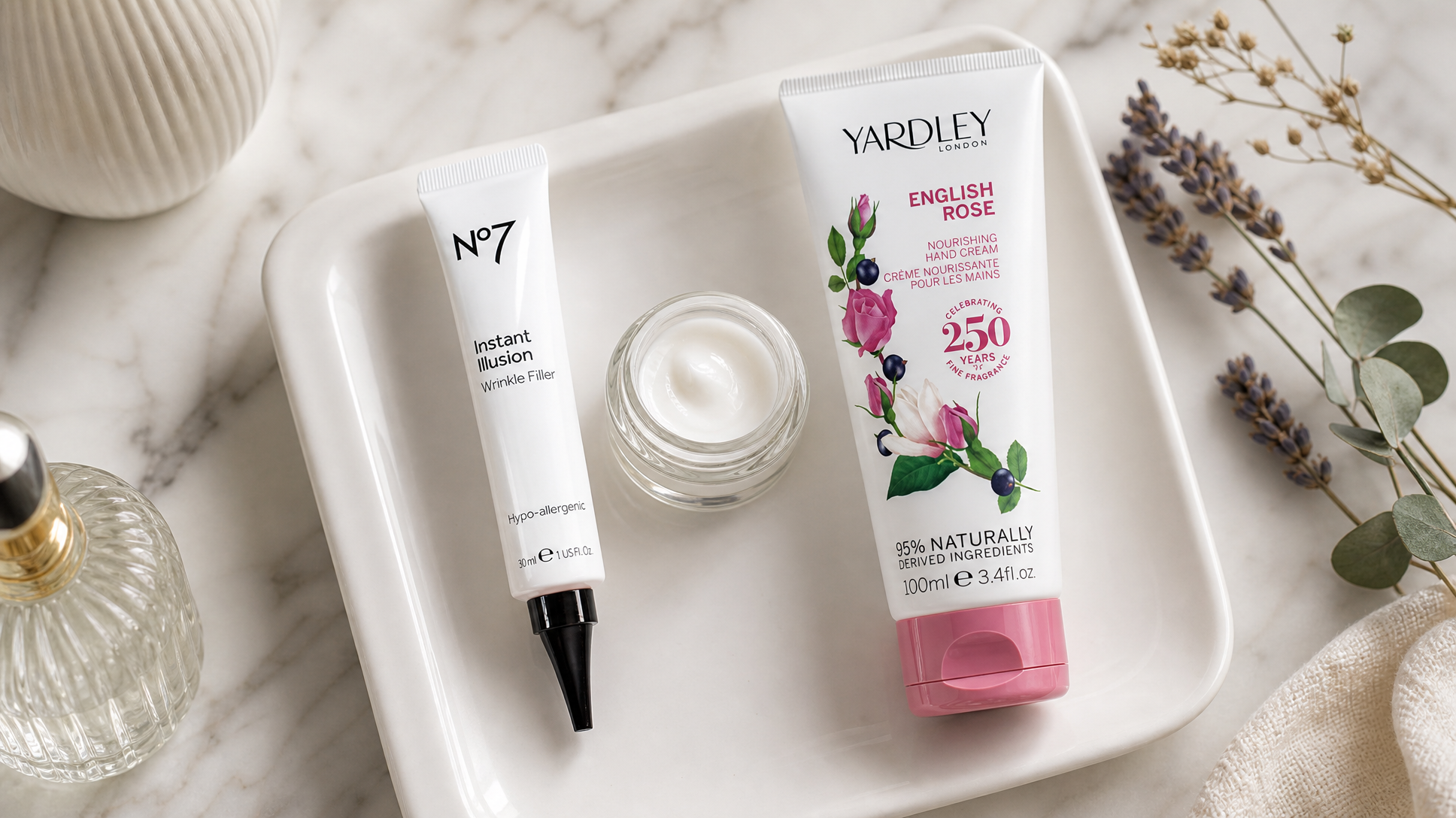
A good example of a serum-step product is the No7 Instant Illusion Wrinkle Filler. It comes in a sleek white tube with a precise applicator tip — designed to target specific areas like fine lines around the eyes or mouth. This kind of targeted treatment is exactly what should go on before your moisturizer: applied directly to the area of concern on damp skin, then sealed in with your cream. It's also labeled hypo-allergenic, which makes it a practical option if your skin tends to react to actives.
For the moisturizer step, a product like the Yardley of London English Rose Nourishing Hand Cream shows how the same layering logic applies beyond your face. Made with 95% naturally derived ingredients, it's a nourishing formula that works best after you've addressed any targeted concerns — and on your hands, that might mean a treatment serum or simply clean, slightly damp skin before applying the cream to lock in softness. The English Rose scent is a genuinely pleasant finish to a hand-care routine, not an afterthought.
Both products are available at FeelForever21's Anti-Ageing collection — worth browsing if you're building out a routine and want options across price points.
The Mistake That Undoes All of It
Applying products too quickly, one right on top of another without giving each a moment to absorb, is probably the most common error. You don't need to wait ten minutes between steps — but give each layer 30 to 60 seconds to settle before adding the next. Piling everything on at once means the layers don't absorb cleanly and you end up with a pilling, balling mess on your skin (especially under makeup).
Slow down by about one minute. That's genuinely all it takes.
If you want to go deeper on building out your full skincare layering routine, our expert-backed guide to building a skincare routine covers ingredient compatibility and sequencing in more detail. And if anti-ageing is your main focus, the post on skin longevity is a solid next read.
The right order isn't complicated — but it does matter. Serum first, moisturizer second, and a little patience between the two. Do that consistently and you'll actually start to see what your products can do.
Ready to find a serum that fits what your skin actually needs? Browse the Anti-Ageing collection at FeelForever21 and shop with free shipping across the USA.
Frequently Asked Questions
Can I skip serum and just use moisturizer?
You can — a moisturizer alone will keep your skin hydrated and support the skin barrier. But serums deliver concentrated active ingredients that moisturizers typically don't contain in the same strength. If you have a specific skin concern (fine lines, dullness, uneven tone), a serum is the step that addresses it directly. Moisturizer maintains; serum treats.
What if my serum feels sticky and doesn't absorb well?
Usually this comes down to two things: applying too much product, or applying it to completely dry skin. Use a small amount and apply it to skin that's still slightly damp after cleansing. Give it 30 to 60 seconds before layering your moisturizer on top. If it still pills or sits on the surface, it may not be compatible with the other products in your routine — particularly if you're mixing oil-based and water-based formulas in the wrong order.
Do I use serum before moisturizer at night too?
Yes — the order stays the same morning and night. Serum goes on first, moisturizer seals it in. The main difference at night is that you can choose richer, heavier versions of both and you're free to use more potent actives in your serum since you don't need to worry about SPF or makeup on top.
How long should I wait between applying serum and moisturizer?
About 30 to 60 seconds is enough for most serums. You're not waiting for it to fully dry — just giving it a moment to settle into the skin so the moisturizer doesn't push it around or cause pilling. If you're using a particularly active formula like a retinol serum, some people prefer to wait a full minute or two before the next step.