Cart
0
The Acronym Everyone's Seeing But Nobody's Explaining
You've probably spotted PDRN on a serum label or in a skincare Reddit thread and kept scrolling, assuming it was just another lab-sounding buzzword. It's not. PDRN has a specific mechanism, a real research background, and a growing presence in K-beauty formulations for reasons that are worth understanding — especially if you're someone who actually wants to know what they're putting on their face.
This post is a plain-language explainer. No lab-coat mystique, no vague promises. Just what PDRN is, how it's thought to work in topical skincare, and how it compares to ingredients you're already familiar with.
So What Does PDRN Actually Stand For?
PDRN stands for Polydeoxyribonucleotide — a mouthful, which is probably why the acronym stuck. At its core, PDRN is a compound derived from DNA fragments, specifically short chains of nucleotides (the building blocks of DNA). In clinical and medical settings, it has been studied for its role in tissue repair and wound healing, which is where its skincare story begins.
The compound is most commonly sourced from salmon DNA, which shares a high degree of structural similarity with human DNA. That compatibility is part of why researchers became interested in it for skin applications in the first place. For a deeper look at the science of polynucleotides, PubMed has a substantial body of peer-reviewed research on PDRN's role in tissue regeneration.
How Is It Thought to Work on Skin?
Here's where it gets genuinely interesting. PDRN is believed to work through a few overlapping pathways:
- Receptor activation: PDRN is thought to stimulate adenosine A2A receptors in skin cells. Activating these receptors is associated with reduced inflammation and a signaling cascade that encourages cell regeneration and repair.
- Collagen and growth factor support: Some research suggests PDRN may help upregulate the production of growth factors involved in new collagen synthesis — which matters for skin firmness and the appearance of fine lines over time.
- Hydration at the cellular level: By supporting the skin's natural repair processes, PDRN may contribute to improved moisture retention, giving skin a plumper, more resilient look.
It's worth being honest here: most of the robust clinical research on PDRN has been conducted in injectable or wound-care contexts, not in over-the-counter topical serums. Topical delivery of large molecules is a known challenge in skincare science — the skin barrier is designed to keep things out. That said, formulators are getting increasingly sophisticated about delivery systems, and the ingredient's presence in topicals is growing precisely because the underlying biology is compelling.
PDRN vs. Retinol vs. Collagen: How Do They Compare?
Context helps. Most skincare enthusiasts already have a working understanding of retinol and collagen, so placing PDRN alongside them makes it easier to see where it fits.
Retinol is a vitamin A derivative that accelerates cell turnover and stimulates collagen production. It's one of the most studied anti-aging ingredients available without a prescription, but it comes with a learning curve — irritation, peeling, and sun sensitivity are real trade-offs, especially in the early weeks of use. It works by changing how skin cells behave at a fairly deep level.
Topical collagen is a different story. Collagen molecules are generally too large to penetrate the skin barrier in their intact form, so when you see "collagen" on a serum label, it's usually working as a surface-level hydrator and smoothing agent rather than replenishing the collagen in your dermis. Hydrolyzed collagen (broken into smaller peptide fragments) has better absorption potential, but even then, the mechanism is more about signaling and hydration than direct structural replacement.
PDRN sits in a different category. Rather than speeding up turnover (like retinol) or smoothing the surface (like topical collagen), it's aimed at supporting the skin's own repair and regeneration signaling. Think of it less as a direct intervention and more as a communication tool — it's trying to remind skin cells to do what they're already supposed to do. That's why it's particularly interesting for people dealing with dullness, loss of elasticity, or skin that feels like it's just not bouncing back the way it used to.
Why K-Beauty Got Here First
PDRN has been used in Korean aesthetic medicine — clinical treatments, not just cosmetics — for years. The crossover into consumer skincare formulations is a natural extension of how K-beauty works: ingredients that prove themselves in clinical and professional settings eventually make their way into accessible, at-home formats. It's the same pipeline that gave us niacinamide serums, snail mucin, and centella asiatica before they became global staples.
Korea's regulatory and innovation environment for cosmetics also tends to move faster than most Western markets when it comes to adopting novel actives. That's not a criticism of Western skincare — it's just a structural reality that explains why you're reading about PDRN now and will probably see it everywhere in two years.
If you want to understand the broader landscape of K-beauty complexion trends, our guide to glass skin, cloud skin, and dewy skin covers the philosophy behind the finishes that K-beauty formulations are engineered to deliver.
What to Look for When Evaluating PDRN Products
Not all PDRN products are created equal, and the ingredient's trendiness means some labels will use it as a marketing hook without meaningful concentration or a thoughtful formula around it. A few things worth checking:
- Where it sits in the ingredient list. Ingredients are listed in descending order of concentration. If PDRN is near the very bottom, it may be present in a token amount.
- What it's paired with. PDRN tends to show up alongside other repair-focused or hydration-boosting ingredients — hyaluronic acid, peptides, niacinamide, and growth factor complexes are common companions. A formula built around complementary actives is a better sign than PDRN floating alone in an otherwise unremarkable base.
- The delivery system. Serums and ampoules (lightweight, high-concentration formats) are the most common vehicles for PDRN in topical skincare, and for good reason — they're designed to deliver actives efficiently.
- Realistic claims. Be skeptical of anything promising PDRN will "replace Botox" or produce dramatic results overnight. The ingredient is genuinely interesting, but it works over time and in concert with a consistent routine.
Where Collagen-Focused Serums Fit In
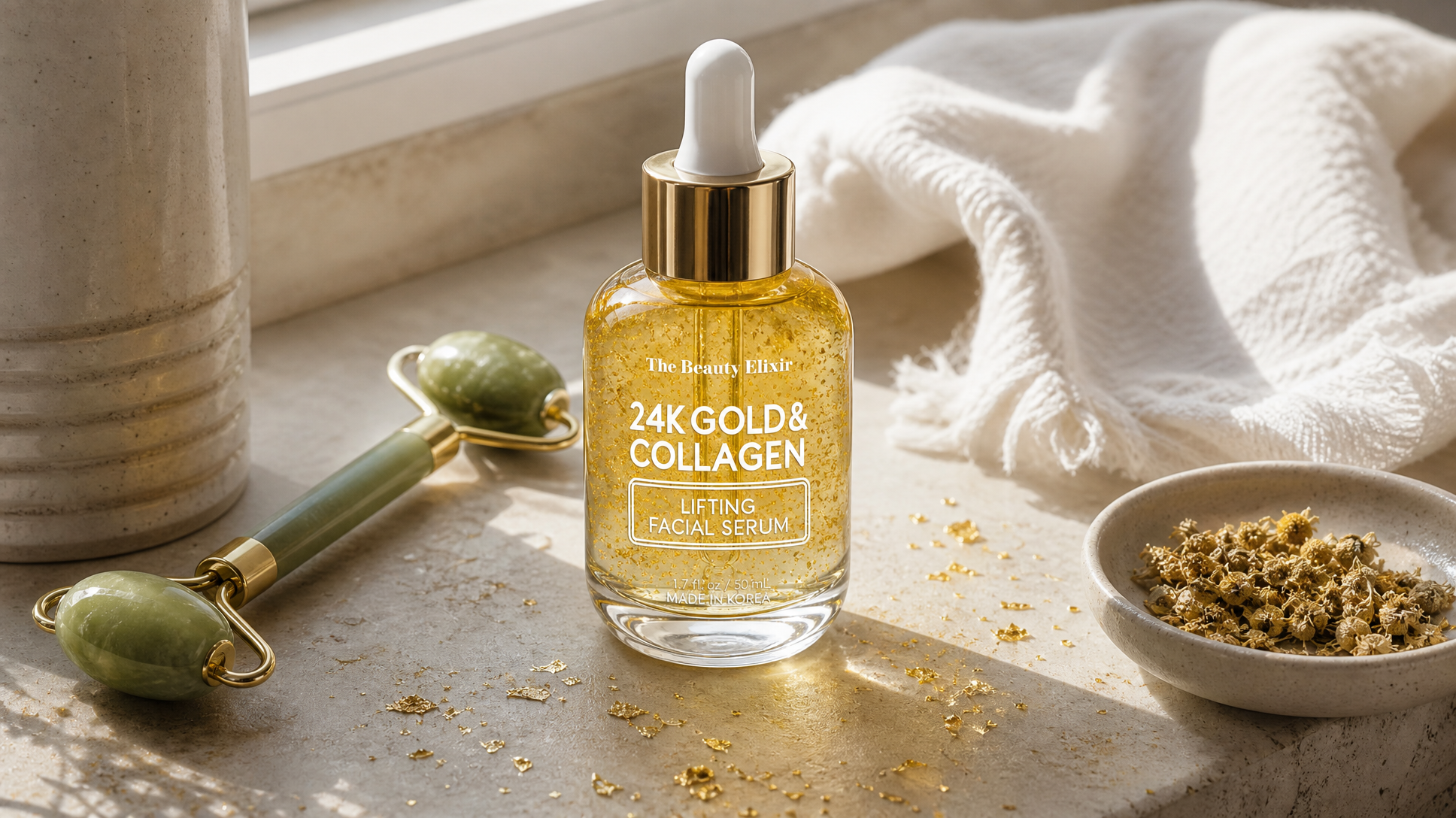
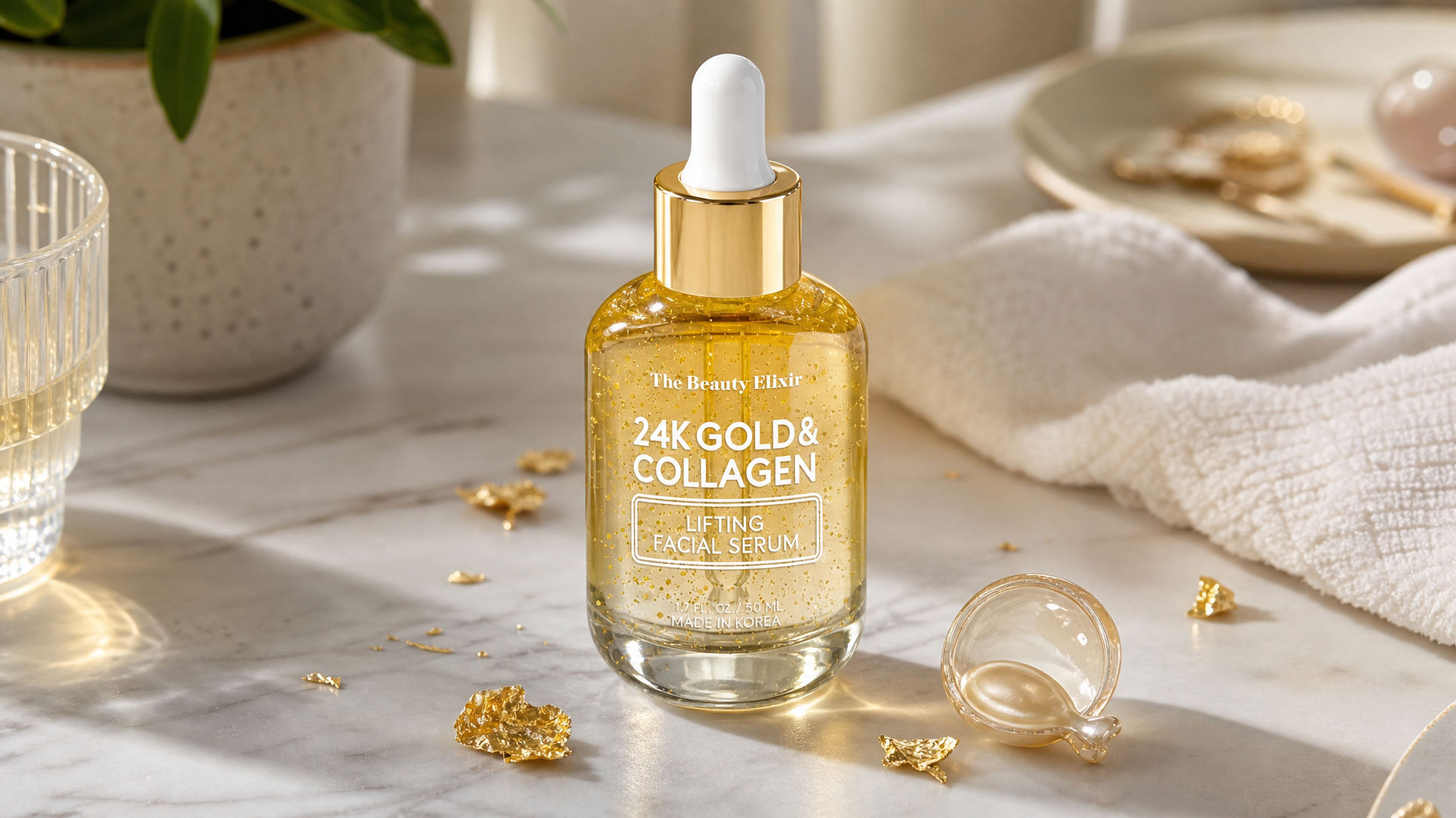
While you're building out a routine that supports skin repair and firmness, it's worth understanding how collagen-forward formulas complement ingredients like PDRN. A serum like The Beauty Elixir 24K Gold & Collagen Lifting Facial Serum — made in Korea and infused with hydrolyzed collagen and 24K gold flakes — works differently from a PDRN product but serves a related goal: improving the look of firmness, hydration, and radiance at the surface level. Its lightweight, fast-absorbing formula makes it the kind of step you can layer into a routine without it feeling heavy, and its hydrating and smoothing properties make it a natural fit before makeup or as part of a nighttime renewal routine.
The point isn't that one replaces the other — it's that understanding what each ingredient does lets you build a routine with intention rather than just stacking trending products and hoping for the best.
For more on how serums fit into a layered routine, our expert-backed guide to building a skincare routine walks through layering order and ingredient compatibility in detail.
The Honest Verdict
PDRN is not hype in the way that some ingredients are hype. The underlying science is real, the clinical research foundation is more substantial than most trending actives, and K-beauty's track record of surfacing genuinely effective ingredients gives it credibility. The honest caveat is that topical delivery is still the limiting factor — you're not replicating an injectable treatment with a serum, and anyone who tells you otherwise is overselling it.
What PDRN does offer is a biologically grounded approach to supporting skin repair and regeneration — one that's worth paying attention to as formulations improve and more real-world data accumulates from consumer use. If you're an ingredient-first shopper who wants to stay ahead of the curve, this is one to understand now rather than later.
Ready to explore K-beauty serums and treatments built around ingredients that actually have science behind them? Browse the full collection at Feelforever21 — free shipping across the USA and a wide range of K-beauty and anti-aging skincare to explore.
Frequently Asked Questions
Is PDRN safe for all skin types?
PDRN is generally considered well-tolerated and is not associated with the irritation that some actives like retinol can cause. It's particularly noted for its anti-inflammatory properties, which makes it a candidate even for sensitive or reactive skin types. That said, everyone's skin is different — patch testing a new product before full application is always a sensible step.
Can you use PDRN with other active ingredients like retinol or vitamin C?
PDRN is not known to have significant conflicts with common actives, and its repair-supportive properties may actually complement ingredients like retinol that can cause temporary irritation. As a general rule, introduce new actives one at a time so you can identify how your skin responds. If you're using retinol, a PDRN product could reasonably be used on alternate nights or in the morning routine while retinol is reserved for evenings.
How long does it take to see results from PDRN skincare?
Skin repair and regeneration are gradual processes. Most ingredient-focused skincare requires consistent use over several weeks before changes in texture, firmness, or radiance become noticeable. PDRN is no different — it's not an overnight fix, and realistic expectations are that you'd assess results after four to eight weeks of regular use rather than days.
What's the difference between PDRN and polynucleotides (PN) in skincare?
PDRN and PN (polynucleotides) are closely related terms that are sometimes used interchangeably in skincare marketing, which creates confusion. Technically, PDRN refers to shorter DNA-derived fragments, while polynucleotides can refer to a broader range of chain lengths. In practice, both are derived from the same source material and share a similar mechanism of action. When you see PN on a label, it's operating in the same biological territory as PDRN — the distinction matters more in a clinical setting than in a consumer serum context.