Cart
0

Most people pick up liquid foundation because that's what they've always used. It's familiar, it's everywhere, and it looks like it should work. But if you've ever ended up patchy by noon, broken out after a week, or felt like your skin couldn't breathe under your base, the format — not the shade — might be the problem.
The good news: you don't have to guess. Once you understand how mineral and liquid foundations actually behave on skin, the right choice becomes pretty obvious. Let's go through it properly.
What's the Real Difference?
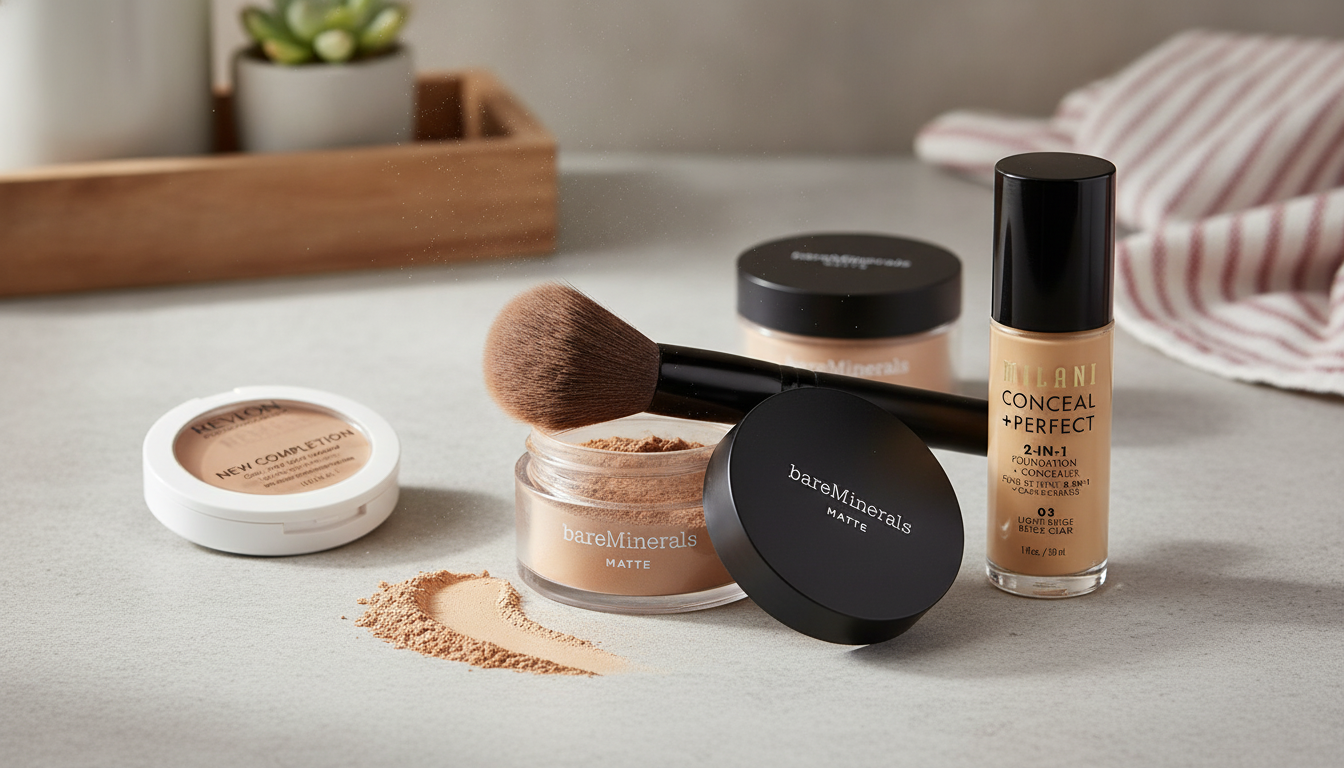
Liquid foundation is exactly what it sounds like — pigment suspended in a liquid base, usually water, silicone, or oil. It goes on wet, blends easily, and dries down to whatever finish the formula is designed for. The Milani Conceal + Perfect Liquid Foundation is a solid example of the format: oil-free, water-resistant, and built to deliver medium-to-full coverage in one step. It also doubles as a concealer, so it's genuinely doing two jobs at once.
Mineral foundation, by contrast, is finely milled powder — typically made from minerals like mica, zinc oxide, and titanium dioxide — with no liquid carrier at all. The bareMinerals Matte Foundation Broad Spectrum SPF 15 and the bareMinerals Original Matte Loose Mineral Foundation SPF 15 are both loose powder formulas: you swirl, tap, and buff them onto skin using a brush, building coverage as you go. Because there's no liquid base, the texture and behavior on skin is completely different from anything in a bottle.
That difference matters a lot depending on your skin type.
Who Should Actually Use Mineral Powder?
If your skin leans oily, mineral powder is often the smarter default. The loose texture absorbs excess oil rather than sitting on top of it, and because there's no liquid or emollient base, it doesn't contribute to shine or clog pores the way some liquid formulas can. The bareMinerals Matte foundations are specifically designed to reduce shine, making them a natural fit for anyone who's tired of looking greasy by mid-morning.
Mineral powder also tends to be gentler for sensitive or acne-prone skin. Without preservatives, fragrance, or liquid carriers, there are fewer ingredients that can trigger a reaction. If your skin flares up every time you try a new liquid foundation, switching to a mineral formula is worth trying.
The trade-off is real, though: loose powder takes a little more technique. You need the right brush, a light hand, and a bit of practice to blend it evenly. And if your skin is dry or flaky, it will cling to texture and emphasize it — which is the opposite of what you want.
Who Should Stick With Liquid?
Dry skin, combination skin that needs targeted coverage, or anyone who wants a polished, second-skin finish — liquid foundation is usually the better fit. The Milani Conceal + Perfect formula is oil-free and water-resistant, which means it won't feel heavy or greasy, but it still delivers that smooth, blended look that powder can struggle to achieve on drier areas.
Liquid is also more forgiving for beginners. It blends with fingers, a sponge, or a brush, and the margin for error is wider than with loose powder. If you're doing your makeup in five minutes before a meeting, liquid is faster to apply and easier to correct.
The catch: if you have oily skin and you're using a liquid formula that isn't specifically oil-free and matte, you're setting yourself up for a rough afternoon. Liquid foundation can trap oil under the surface and break down faster on oily skin — which is exactly when mineral powder has the advantage.
What About Coverage?
This is where people often assume liquid automatically wins — and it doesn't, necessarily. The Milani Conceal + Perfect is designed for medium-to-full coverage, so yes, it can cover blemishes and discoloration in a single pass. But the bareMinerals loose mineral foundations offer buildable coverage: start sheer, add a second layer, and you can reach a surprisingly solid level of coverage without the heavy, cakey feeling that can come with a thick liquid application.
For everyday wear where you want skin to look like skin, both formats can get you there. For high-coverage needs — a big event, significant redness, or deeper discoloration — liquid tends to be more efficient. For a natural, breathable finish that holds up through a long day, mineral powder is hard to beat.
The Compact Option: A Middle Ground
Worth mentioning: the Revlon New Complexion One-Step Compact Makeup sits between the two formats. It's a pressed powder in a compact — so it has the portability and touch-up convenience of powder, but with a slightly creamier feel than loose mineral. If you want powder without the swirl-and-buff routine of loose mineral, a compact like this is a practical middle ground, especially for on-the-go touch-ups over liquid foundation.
A Quick Side-by-Side
- Oily skin: Mineral powder (bareMinerals Matte) — absorbs oil, reduces shine, breathable
- Dry or combination skin: Liquid (Milani Conceal + Perfect) — smooth, hydrating finish, more forgiving
- Sensitive or acne-prone: Mineral powder — fewer potential irritants, gentler on reactive skin
- Need high coverage fast: Liquid — more efficient for full coverage in one pass
- Prefer buildable, natural coverage: Mineral powder — sheer to medium, layerable
- Touch-ups on the go: Compact powder (Revlon New Complexion) — compact and portable
The Bottom Line
There's no universally better format — but there is a better format for your skin. If you've been using liquid out of habit and your skin has been fighting you, try mineral. If you've avoided powder because it sounds complicated, the bareMinerals loose foundations are genuinely beginner-friendly once you have the right brush. And if you want the coverage and ease of liquid without the oil, the Milani Conceal + Perfect is a solid, no-fuss option.
The only mistake is assuming one format works for everyone. It doesn't.
Browse both formats — and everything in between — at FeelForever21, with free shipping across the USA. Whether you're switching formats for the first time or stocking up on what already works, it's all in one place.
Frequently Asked Questions
Can I use mineral powder foundation over moisturizer or SPF?
Yes, but let your moisturizer or SPF absorb fully and dry down before applying loose mineral powder. Applying powder over a still-wet base can cause pilling or uneven coverage. Waiting a minute or two makes a noticeable difference in how smoothly the powder buffs on.
Is liquid foundation or mineral powder better for mature skin?
It depends on the specific concerns. Loose mineral powder can settle into fine lines if over-applied, which is why a light hand and a fluffy brush matter. Liquid foundation can look more skin-like on mature skin that's also dry. That said, a light layer of mineral powder used as a finishing step over a hydrating liquid base is a combination many people find works well.
Do I need a primer before loose mineral foundation?
Not necessarily, but a primer can help the powder adhere better and extend wear — especially if your skin is on the drier side. For oily skin, many people find mineral powder performs just fine without one. It's worth trying both ways to see what your skin responds to.
What's the difference between the two bareMinerals Matte foundations listed here?
Both are loose mineral powder foundations with SPF 15 and a matte finish. The bareMinerals Matte Foundation Broad Spectrum SPF 15 in Golden Tan and the bareMinerals Original Matte Loose Mineral Foundation SPF 15 are both loose powder formats designed to reduce shine and offer buildable coverage. The key difference you'd notice is the shade — so choosing between them comes down to matching your skin tone accurately.