Cart
0
You found a lipstick you've been eyeing for months, listed at a price that seems almost too good. The photos look right. The brand name is spelled correctly. You add it to your cart. And two weeks later, something about it is just... off — the smell, the texture, the way the packaging feels in your hand. That's the counterfeit makeup experience, and it happens to careful shoppers every day.
Fake beauty products aren't a niche problem. They show up on third-party marketplace listings, discount storefronts, and social media shop links. The packaging has gotten sophisticated enough that even side-by-side photos can fool you. But there are still tells — and once you know what to look for, they're hard to unsee.
1. The Price Is Suspiciously Below Retail
This is the oldest signal and still the most reliable. Authentic makeup from established brands has a price floor — the brand sets it, and legitimate retailers hold close to it. When you see a well-known eyeshadow palette or a premium serum listed at a fraction of what it costs everywhere else, the discount isn't a steal. It's a warning.
Counterfeits exist because there's margin in them. A seller can't offer a genuine product at 60% off and make money — so they don't. If the price makes you do a double-take, trust that instinct and check the brand's official site for the standard retail range before you buy.
2. Packaging Details That Don't Quite Add Up
Counterfeiters are good, but they're rarely perfect. The most common giveaways are in the small stuff: fonts that are slightly thicker or thinner than usual, logo placement that's a millimeter off, embossed text that feels shallow or uneven, and color matching on boxes that drifts just enough to notice under natural light.
On lipsticks especially, check the bottom stamp. Authentic products typically carry a batch code and country-of-origin text that's clean and consistently formatted. On fakes, this area is often blurry, misaligned, or missing entirely. If the product listing photos don't show the back and bottom of the packaging, that's worth noting too — a seller with nothing to hide usually shows you everything.
3. Uneven or Off-Color Product Pans
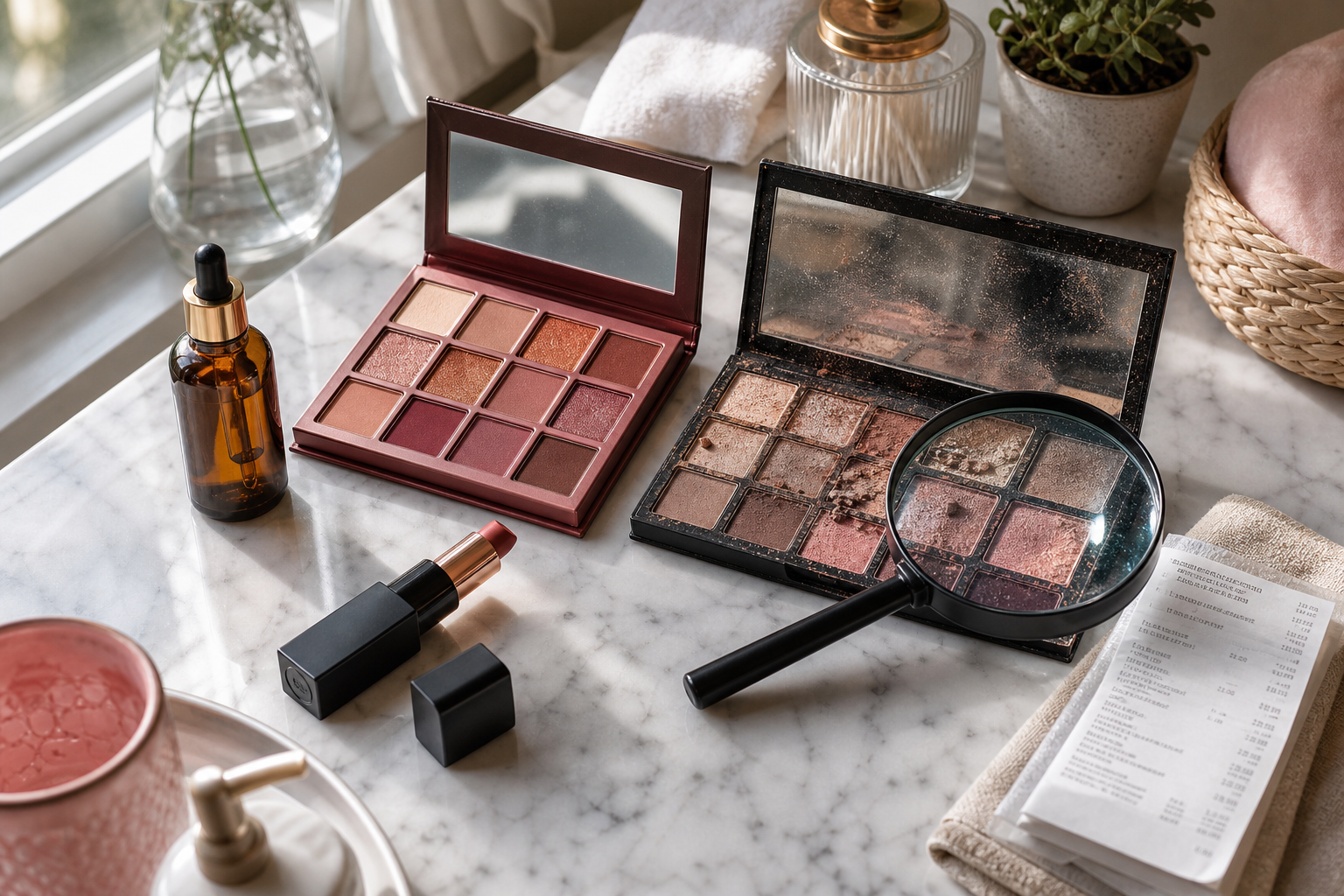
Eyeshadow palettes are one of the most commonly counterfeited makeup items, and the pans are where fakes usually slip up. In a genuine palette, the pressed powder is smooth and consistent — the surface is even, the color matches what's shown on the lid or in brand imagery, and the shimmers have a uniform distribution of pearl or glitter.
In counterfeit palettes, you often see pans that look chalky or dusty when they should be pigmented, shades that are noticeably different from the brand's official color story, and uneven pressing that leaves ridges or crumbles at the edges. If a listing shows product photos that look slightly desaturated or blurry compared to the brand's own images, the seller may be hiding exactly this.
4. Formula Consistency That's Wrong for the Product Type
This one you usually discover after purchase, but some listing clues can tip you off early. A serum that's supposed to be lightweight and fast-absorbing shouldn't look thick and opaque in the bottle. A foundation described as buildable medium coverage shouldn't appear separated or chunky in opened-product review photos.
If the listing includes customer photos or reviews mentioning an unusual smell, a texture that feels different from what they expected, or irritation they don't normally get from the brand — pay attention to those. Counterfeit formulas are made without the quality controls of the real product, which means they can contain undisclosed ingredients, incorrect concentrations, or outright harmful substitutes. A bad color is disappointing; a bad formula can do real damage to your skin.
5. The Seller Has No Verifiable Relationship With the Brand
Legitimate retailers — whether they're large platforms or independent online stores — can demonstrate that they source products through authorized channels. When a seller can't point to any brand authorization, has no return policy worth reading, and their storefront launched recently with hundreds of brand-name products at steep discounts, that combination should stop you cold.
Look for stores that have been operating for a meaningful amount of time, carry consistent product descriptions that match the brand's official language, and have a clear customer service path if something goes wrong. The extra two minutes of vetting before you buy is worth it every time.
Why Buying From a Vetted Retailer Actually Matters
The checklist above helps, but it's also a lot of work to do for every single purchase. The simpler solution is to shop somewhere you don't have to play detective. When a retailer has a real storefront, a clear return policy, and a track record with customers, the products they carry are the real thing — because their business depends on it.
Counterfeits also tend to cluster in certain categories: high-demand palettes, cult-favorite lip products, and premium skincare serums. These are exactly the items worth being most careful about, and exactly the items where buying from a trustworthy source pays off most.
If you want to browse genuine makeup and beauty products without running through a five-point authentication checklist, explore the full collection at FeelForever21 — authentic products, free shipping across the USA, and a catalog wide enough that you'll rarely need to look anywhere else. New shoppers can also use code WELCOME5 for 5% off their first order.
And if you're building out a broader beauty routine alongside your makeup picks, our expert-backed skincare routine guide is a solid next read.
Frequently Asked Questions
Can counterfeit makeup actually harm your skin?
Yes, it can. Counterfeit formulas are made without the safety testing and quality controls that legitimate brands follow. They can contain undisclosed ingredients, incorrect concentrations of active compounds, or substitutes that cause irritation, breakouts, or allergic reactions. This is especially risky with products that go near your eyes or stay on skin for extended periods.
Are fakes only a problem on big marketplaces, or do they show up on smaller sites too?
They show up anywhere a third-party seller can list products without strong brand oversight — that includes large marketplaces, social media shops, and small discount storefronts. The platform size doesn't guarantee authenticity. What matters is whether the specific seller has a verifiable, authorized relationship with the brands they carry.
What's the fastest way to verify if a product is genuine before buying?
Cross-reference the product listing against the brand's official website — check the packaging design, the shade names, the product description language, and the price. If any of those details don't match, that's a red flag. You can also check whether the seller is listed as an authorized retailer on the brand's site, which many brands publish publicly.
Is it safe to buy makeup from online stores if I can't physically inspect the product?
Yes — as long as you're buying from a retailer with a clear track record, a real return or customer service policy, and products sourced through legitimate channels. The red flags in this post apply mainly to sellers who lack those basics. A well-established online beauty retailer with genuine product listings and customer reviews is a safe place to shop.