Cart
0
The most expensive skincare mistake isn't buying the wrong product. It's buying five wrong products because someone on TikTok swore their seven-step routine changed their life. Their skin isn't your skin. Their climate, their diet, their genetics — none of it is yours. And yet most of us have a bathroom shelf that tells exactly that story: half-used bottles bought on a whim, a serum that broke us out, a moisturizer that felt like paste.
Building a routine that actually works starts before you open a single product page. It starts with four honest questions.
Ask These Four Questions Before You Buy Anything
1. What is my actual skin type right now?
Not what it was in high school. Skin changes with age, season, stress, and hormones. The simplest test: wash your face with a gentle cleanser, don't apply anything, and check in after an hour. If your skin feels tight and looks dull, you're likely on the drier side. If your T-zone is visibly shiny but your cheeks feel fine, that's combination. Oily all over? You know. Reactive, red, or easily irritated? Sensitive — and that matters a lot for what you can and can't layer.
2. What is my one real concern?
Not six concerns. One. The beauty industry profits from convincing you that you need to address acne, hyperpigmentation, fine lines, pores, and dullness simultaneously. You don't — and trying to usually makes things worse. Pick the concern that bothers you most right now. That becomes your treatment anchor. Everything else in your routine exists to support it, not compete with it.
3. How much time will I actually spend on this?
Be ruthless here. A four-step routine you do every day beats a ten-step routine you abandon by Wednesday. If you're a wash-and-go person in the morning, plan for three products max. If you actually enjoy a slow evening ritual, you have room for more. Honesty about your habits is more useful than aspirational routines you'll never stick to.
4. What is my skin's current state — stressed or stable?
If your skin is actively breaking out, flaking, or reacting to something, this is not the moment to introduce four new products. Start with one or two, let your skin stabilize, and layer in more over time. Introducing too much at once means you'll never know what helped or what caused a flare.
The Four Pillars of a Functional Routine
Once you've answered those questions honestly, the actual product selection becomes much simpler. Every effective routine — minimal or multi-step — is built on the same four categories.
Cleanser: The non-negotiable foundation
Your cleanser's only job is to remove what doesn't belong on your skin: dirt, oil, SPF, makeup, pollution. It should not strip, tighten, or leave your face feeling squeaky. If it does, it's too harsh, and everything you apply afterward has to work harder to compensate.
For dry or sensitive skin, a cream or oil-based cleanser is generally gentler. For oily or acne-prone skin, a gel or foaming formula tends to work better — but "foaming" doesn't have to mean stripping. The key is pH balance and the absence of harsh surfactants. If your face feels tight immediately after washing, that's your cleanser telling you it's not the right fit.
Treatment: The step that's specific to you
This is where your answer to question two actually matters. Someone dealing with persistent breakouts needs a completely different treatment step than someone focused on early signs of aging. These goals aren't interchangeable, and neither are the products.
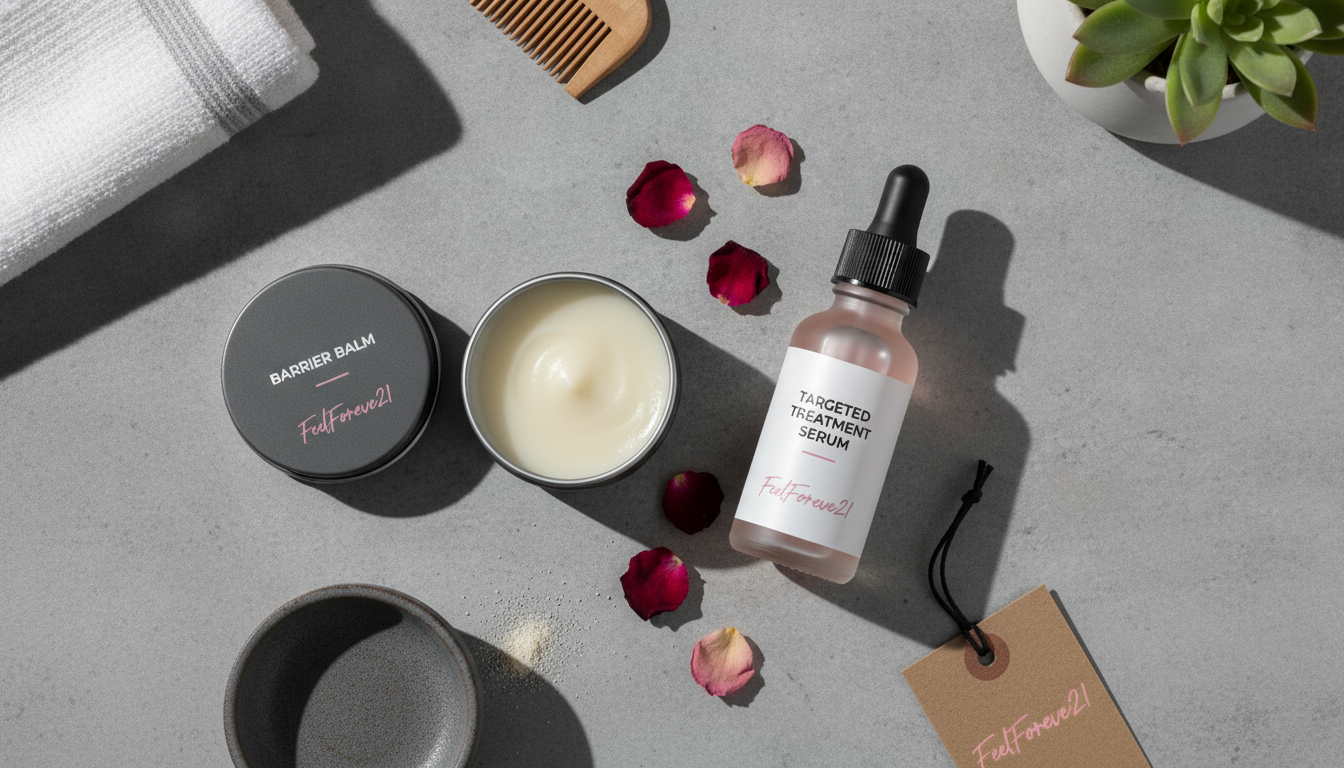
For a minimal, ingredient-focused approach — particularly for sensitive or reactive skin — a simple balm or barrier-supporting formula can serve as both treatment and moisturizer in one. The Forge Skin Face Tallow Balm in the collection is a good example of this kind of stripped-back philosophy: fewer ingredients, a focus on skin-barrier support, nothing unnecessary.
For a targeted anti-aging step, a serum is usually the right vehicle — serums are formulated to deliver actives at a concentration that a moisturizer can't. The Beauty Elixir 24K Gold & Collagen Lifting Facial Serum represents this end of the spectrum: a dedicated treatment step for someone whose primary concern is firmness or visible aging, applied before moisturizer to let the actives penetrate first.
The point isn't that one approach is better. It's that they serve different goals, and you should pick based on your answer to question two — not based on which one sounds more impressive.
Moisturizer: Seal, don't skip
Even oily skin needs moisture. What it doesn't need is a heavy cream formulated for dry skin — that's where the "moisturizer breaks me out" belief usually comes from. Oily and combination skin types tend to do well with lightweight, gel-based, or water-based moisturizers that hydrate without adding occlusion. Dry skin benefits from richer creams or balms that lock in hydration and support the skin barrier.
If you're using a treatment serum, apply it first, let it absorb, then moisturize on top. If you're using something like a tallow balm that functions as both treatment and moisturizer, you may not need a separate moisturizer at all — which is exactly why that kind of product appeals to people who want fewer steps.
SPF: The one product with the most evidence behind it
Daily sun protection is the single most well-supported skincare habit in dermatology. It doesn't matter how good your serum is — if you're not wearing SPF in the morning, you're undoing a significant portion of the work. This applies indoors too, because UVA rays penetrate glass.
SPF goes on last in your morning routine, after moisturizer. At night, skip it — it serves no function after dark, and your nighttime routine can lean into repair and hydration instead.
A Simple Framework to Put It Together
Here's what a functional routine actually looks like once you've done the thinking:
- Morning: Cleanser (or just water if your skin is dry and not very oily) → Treatment serum if using one → Moisturizer → SPF
- Evening: Cleanser → Treatment (balm, serum, or targeted product) → Moisturizer
That's it. Three to four products per routine. You can add to it later — an exfoliant once or twice a week, an eye cream if that's a concern — but start here and let your skin tell you what it needs next.
The Mistake That Derails Most People
Switching products too fast. Give any new product at least three to four weeks before you judge it. Skin cell turnover takes time, and most products need a full cycle to show meaningful results. If you're changing products every two weeks because you haven't seen a transformation, you're not giving anything a fair chance — and you're spending more money in the process.
The exception: if a product causes redness, burning, or a new breakout pattern within the first few days, stop using it. Purging (a temporary increase in breakouts when starting certain actives) is real, but it's distinct from a reaction. When in doubt, pause and let your skin settle before reintroducing.
A routine built around your actual skin — your type, your one real concern, your real schedule — will always outperform someone else's viral regimen. It'll also cost less, because you stop buying things that were never meant for you in the first place.
Ready to start? Explore skincare products across every concern at FeelForever21 — from gentle cleansers and barrier balms to targeted serums — and use code WELCOME5 for 5% off your first order. If you want to go deeper on specific routine topics, the expert guide to skincare routine layering and ingredients is worth reading next.
Frequently Asked Questions
How do I know if I have combination skin versus oily skin?
The wash-and-wait test is the easiest way to tell. After cleansing and waiting about an hour with nothing applied, check different zones on your face. If your entire face looks shiny and feels slick, that's oily. If only your forehead, nose, and chin are oily while your cheeks feel normal or even a little tight, that's combination. The distinction matters because combination skin often needs lighter products in the T-zone and slightly richer ones on the cheeks.
Can I use a serum and a balm in the same routine?
Yes, but order matters. Apply your serum first — it's water-based and needs direct contact with skin to absorb properly. Follow with your balm or moisturizer on top to seal everything in. If your balm is very occlusive (thick, wax- or tallow-based), use it as your final step at night rather than layering more products over it.
Do I really need a separate morning and evening routine?
The core difference is SPF in the morning and no SPF at night — that's the non-negotiable split. Beyond that, evening is a better time for stronger actives (like retinoids or certain exfoliants) because they can increase sun sensitivity. Morning is for protection and hydration. If you're keeping things minimal, you can use the same cleanser and moisturizer both times and just add SPF in the morning.
How long before I see results from a new skincare routine?
Most products need at least three to four weeks to show noticeable results, because that roughly aligns with the skin's natural cell turnover cycle. Some products — particularly those targeting hyperpigmentation or fine lines — can take two to three months of consistent use before the difference is clearly visible. Patience and consistency matter more than switching to something new every few weeks.