

Cart
0
You've probably got at least one half-used lotion sitting on your bathroom shelf right now. Maybe two. You bought them because the packaging was pretty or they smelled incredible in the store, and now they're just... there, not really doing much. Your skin still feels tight by lunchtime, and you're back to square one wondering what you're missing.
Here's the thing: it's usually not your skin. It's the product format. Body butters, firming creams, and standard lotions are genuinely different products with different jobs — and buying the wrong one for your skin type or routine is the most common reason people feel like moisturizer just "doesn't work" for them.
Before you add another bottle to the collection, here are five things worth knowing.
1. Body Butter and Body Lotion Are Not the Same Thing (Even If They're Shelved Together)
The biggest confusion starts at the shelf. Body lotions are water-based emulsions — they spread easily, absorb quickly, and feel light on the skin. That's great for mornings when you need to get dressed fast, or for people who run warm and hate the feeling of anything heavy sitting on their skin.
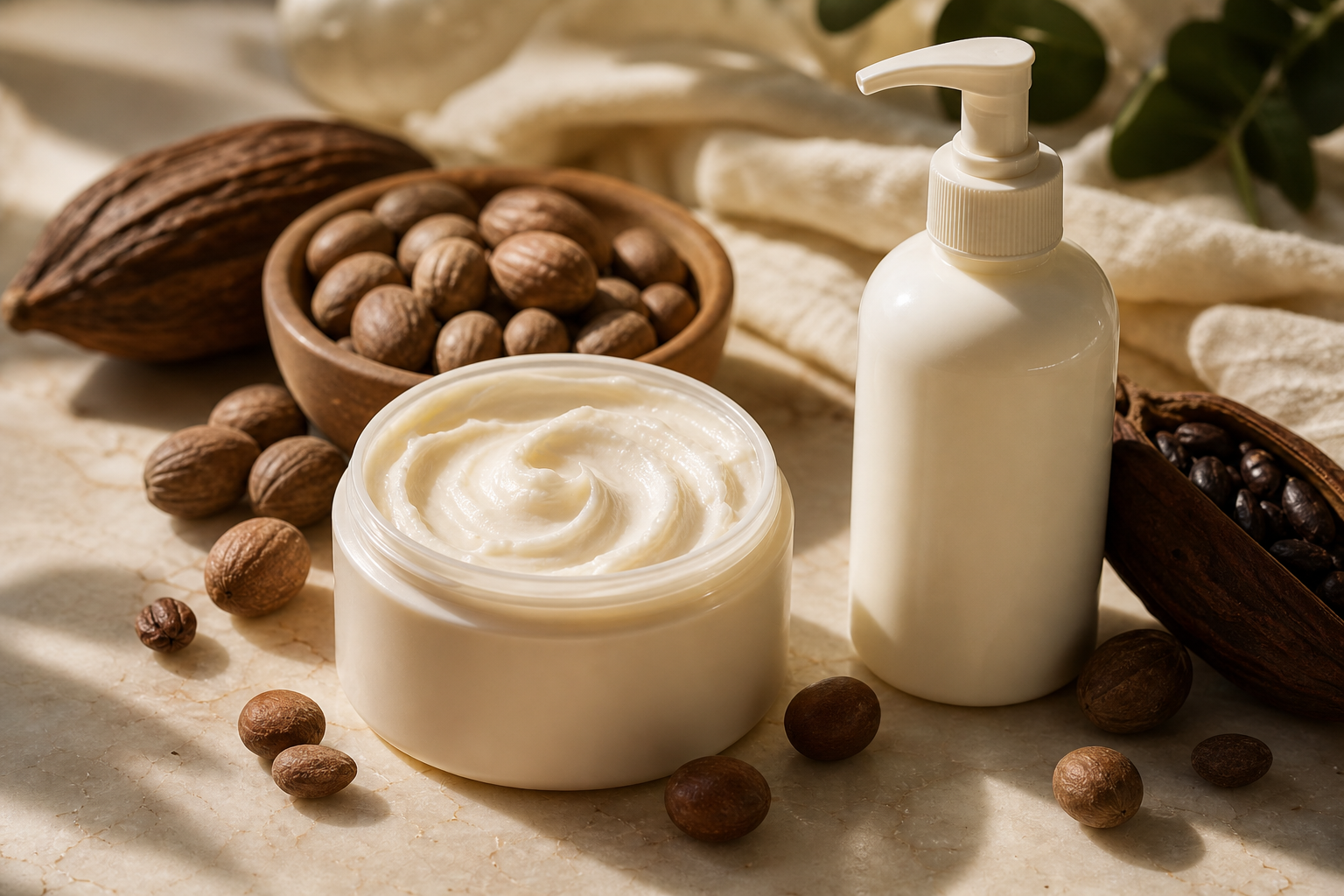
Body butters are a different category entirely. They're made primarily from plant-based fats — shea, cocoa, mango, and similar rich ingredients — with little to no water content. That's why they feel dense and almost waxy straight from the jar. That density is exactly the point: it creates a more occlusive barrier on the skin that locks in moisture for longer. If you're someone who moisturizes every morning and still feels dry by noon, a body butter is almost certainly worth trying.
The trade-off is absorption time. Body butters take longer to sink in, which means they're better suited to a nighttime routine or a slower morning — not right before you pull on dark-colored clothes.
2. Firming Creams Are a Third Category — Don't Confuse Them with Either
Firming creams sit somewhere between the two in texture, but they're formulated with a different goal in mind. Where a lotion hydrates and a body butter seals in moisture, a firming cream is designed to target skin elasticity and texture — typically around areas like the stomach, thighs, and arms.
A product like Palmer's Cocoa Butter Firming Butter Pump is a good example of how these categories can overlap: it has the richness of a body butter but is specifically formulated to address skin firmness. If your main concern is overall dryness, a standard body butter or lotion covers that. If you're dealing with post-pregnancy skin changes, weight fluctuation, or just want to support skin elasticity over time, a firming formula makes more sense as your daily pick.
Worth noting: no topical cream can replicate what happens in deeper skin layers, and results from firming products vary from person to person. But consistent daily use of a well-formulated firming cream does more than ignoring the concern entirely.
3. Your Skin Type Should Drive the Format Choice — Not the Scent
Smelling nice is a bonus. It should not be the deciding factor.
Here's a rough guide based on skin type:
- Very dry or rough skin (elbows, knees, heels, or skin that flakes) — go for a body butter. The higher fat content is what that skin actually needs.
- Normal to dry skin — a rich lotion or light body butter works well. This is the most flexible category.
- Oily or combination skin — stick to a lightweight lotion that absorbs fully. A body butter on already-oily skin can clog pores and feel uncomfortable.
- Skin with elasticity concerns — layer: use a firming cream on targeted areas and a regular lotion everywhere else.
If you've been reaching for whatever smells like vanilla or coconut without thinking about this, that's probably why you keep ending up disappointed. The formula matters more than the fragrance.
4. When You Apply It Matters as Much as What You Apply
Moisturizer works best on damp skin — right after a shower, before you've fully toweled off. The product doesn't create moisture from nothing; it helps trap what's already there. Apply a body lotion to completely dry skin an hour after your shower and you're getting a fraction of the benefit.
For body butters specifically, the damp-skin rule is even more important because the formula is denser and harder to spread on dry skin. A small amount goes a long way when applied to slightly damp skin versus needing to pile on more to cover dry patches.
Nighttime is also genuinely a better window for body butters if you can manage it. Your skin does most of its repair work while you sleep, and a richer formula applied before bed — especially to rough areas — will make a noticeable difference within a few weeks of consistency.
5. Ingredient Lists Tell You More Than Marketing Claims
"Deeply nourishing," "ultra-hydrating," "intensely moisturizing" — these phrases are on almost every bottle and mean very little on their own. What actually tells you what a product will do is the ingredient list.
A few things to look for:
- Shea butter, cocoa butter, or mango butter near the top of the list signals a genuinely rich, occlusive formula — good for dry skin and body butters.
- Glycerin is a humectant that draws moisture into the skin. It's a reliable workhorse ingredient in both lotions and creams.
- Dimethicone in a lotion creates a smooth, protective layer — good for sealing in moisture but can feel slightly silicone-y on the skin.
- Fragrance listed high up in the ingredients can be a red flag for sensitive skin, since it's one of the more common irritants in body care.
You don't need a chemistry degree to read a label. Just check whether the first five ingredients match what your skin actually needs — and be skeptical of products where "water" and "fragrance" are doing most of the heavy lifting.
The Bottom Line
The right body moisturizer isn't the one with the best marketing or the prettiest jar. It's the one that matches your skin type, fits your routine, and has the ingredients to back up what it promises. Once you know the difference between a lotion, a body butter, and a firming cream — and when to use each — you stop buying products that let you down and start actually seeing results.
Browse body butters and firming creams at FeelForever21 — with free shipping on every order across the USA, it's easy to find the right format for your skin without overspending. Explore the best-selling products to see what other shoppers are reaching for, or check out the full all collection for the widest range of options.
Frequently Asked Questions
Can I use body butter on my face?
Generally, no — and especially not if you're acne-prone. Body butters are rich, occlusive formulas designed for thicker skin on the body. The skin on your face is thinner and more sensitive, and the heavy fats in a body butter can clog pores and trigger breakouts. Stick to facial moisturizers specifically formulated for face skin.
Is body butter better than lotion for very dry skin?
For most people with genuinely dry skin — the kind that flakes, cracks, or feels tight within hours of moisturizing — body butter tends to outperform standard lotion because its higher fat content creates a more effective moisture barrier. That said, applying any moisturizer consistently to damp skin will improve results significantly, regardless of format.
How long does it take to see results from a firming cream?
Results from firming creams vary by person and depend heavily on consistency. Most people who use a firming cream daily notice improvements in skin texture and smoothness over several weeks of regular use. No topical product can produce dramatic structural changes overnight, so daily application over time is the key.
Can I layer a body butter over a lotion?
Yes, and it's actually a smart approach for very dry skin or dry climates. Apply your lotion first to deliver hydration, let it absorb for a minute, then apply a small amount of body butter on top to seal everything in. Focus the body butter on the driest areas — elbows, knees, heels — rather than applying it all over.


