Cart
0
How to Properly Store Perfume to Maintain Fragrance Quality and Longevity
Preserving the unique scent and vibrancy of your perfume requires more than just careful application—it starts with how you store it. This guide offers expert-backed tips to ensure your fragrances stay fresh and enjoyable for years to come.
Key Takeaways
- Protect perfumes from exposure to direct sunlight and UV rays by storing them in original boxes or dark, opaque spaces.
- Maintain a stable, cool temperature between 55°F and 70°F (13°C to 21°C) to prevent breakdown of fragrance molecules.
- Keep bottles tightly sealed to minimize oxidation caused by air exposure.
- Store perfumes in dry environments with moderate humidity levels (45-55%), avoiding damp areas like bathrooms.
- Handle bottles gently without shaking and always keep them upright.
- Use original bottles and packaging to preserve fragrance integrity and protection.
- Travel with travel-sized atomizers and keep perfumes cushioned and in carry-on luggage.
- Monitor perfume aging by observing changes in color, scent, and clarity.
- Use your perfumes regularly to enjoy their full complexity and prevent stagnation.
Table of Contents
- Why Proper Perfume Storage is Necessary
- 1. Shield from Sunlight
- 2. Avoid Heat and Temperature Fluctuations
- 3. Prevent Air Exposure
- 4. Monitor Humidity
- 5. Handle with Care
- 6. Use Original Bottles and Packaging
- 7. Travel Wisely
- 8. Keep Tabs on Perfume Aging
- 9. Develop a Routine
- FAQ
Why Proper Perfume Storage is Necessary
Perfume is a delicate blend of fragrant oils, alcohol, and water. Exposure to heat, light, humidity, and air triggers oxidation—the chemical breakdown that weakens and alters the fragrance’s notes and color. Experts from luxury and indie perfume brands stress that proper storage significantly extends a perfume’s lifespan, preserving its signature aroma and vibrancy.
1. Shield from Sunlight: Keep Perfume Away from Direct Light
Ultraviolet (UV) rays from sunlight can damage the aromatic molecules in perfume, particularly delicate citrus and floral notes, leading to scent deterioration and color changes.
Best practices include:
- Storing perfume bottles in their original boxes to block light.
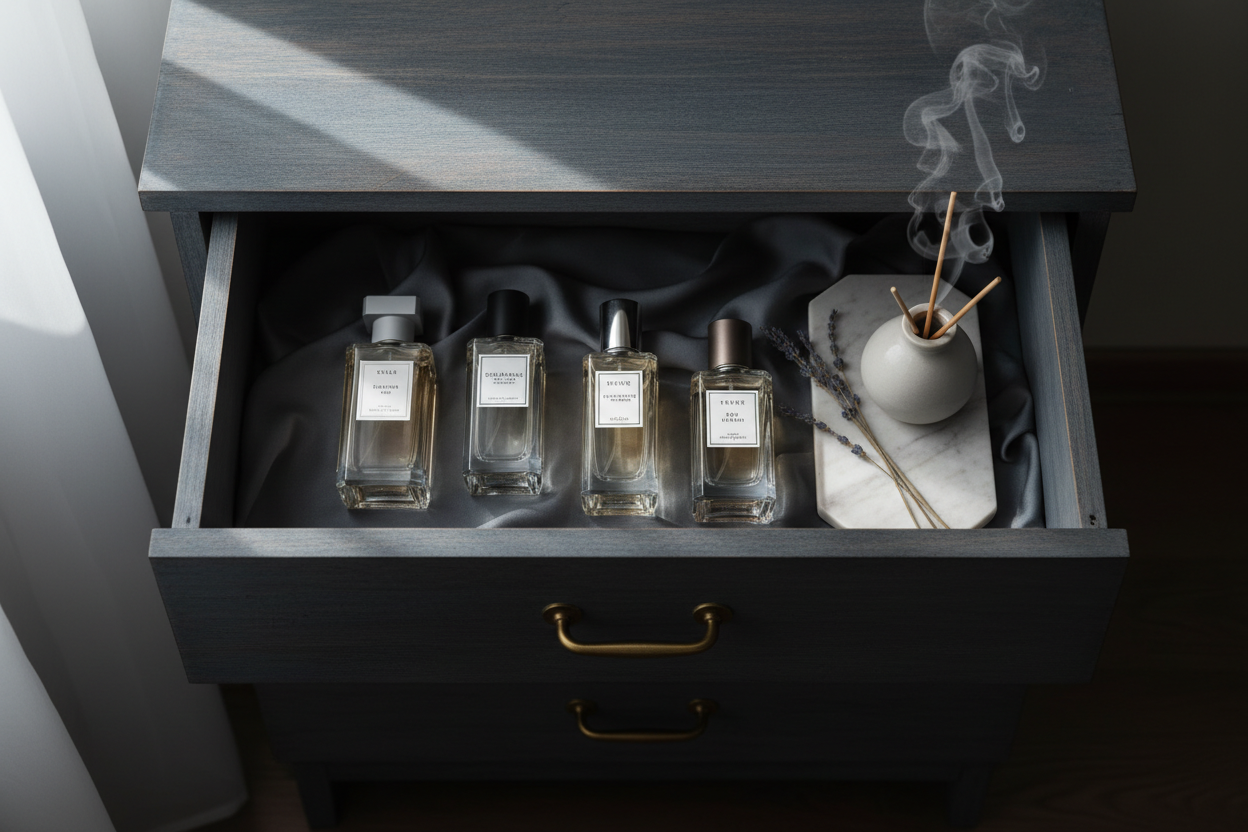
- Placing bottles in a drawer, closet, or opaque cabinet away from sunlight.
- Avoiding locations such as windowsills or open shelves exposed to daylight.
Anne Serrano-McClain, a Grasse perfumer, recommends storing perfumes in dry, dark places to prevent oxidation from bathroom light and humidity.
Read more at historyofperfume.net
2. Avoid Heat and Fluctuations: Maintain Stable Temperature
Heat and temperature changes accelerate perfume molecule breakdown, especially affecting alcohol and base notes, altering the scent over time.
To preserve your perfume:
- Keep perfumes at a constant temperature between 55°F and 70°F (13°C to 21°C).
- Avoid humid spaces like bathrooms and areas near heaters, radiators, or air vents.
- Do not place bottles by sunny windows or frequently opened windows causing temperature swings.
Luxury brands like Lancôme advise against fridge storage as it might shock the fragrance molecules. Instead, use a consistently cool, dark cupboard or drawer.
Learn more at teracendani.com
3. Prevent Air Exposure: Ensure Your Bottles are Sealed Tightly
Oxygen causes oxidation and weakens fragrance molecules. Minimizing air exposure is essential to keep your perfume fresh.
- Always reseal bottles tightly immediately after use.
- Avoid leaving caps loose or sprayers exposed unnecessarily.
- For large bottles used infrequently, transfer small amounts into travel-sized atomizers to preserve the main bottle’s integrity.
Buchart Colbert, an indie brand, highlights the importance of airtight seals in maintaining fragrance quality and consistency.
More details at historyofperfume.net
4. Monitor Humidity: Select Dry Storage Locations
Excess humidity can break down volatile compounds, damage labels, and encourage mold on caps and packaging.
Tips for controlling humidity:
- Avoid storing perfumes in bathrooms or moisture-heavy areas.
- Select spots with consistent humidity levels around 45-55%.
- Keep perfumes away from kitchens, laundry rooms, and garages prone to humidity fluctuations.
Anne Serrano-McClain advises against bathroom storage due to humidity accelerating oxidation, especially impacting tropical and floral fragrances.
Source: alibaba.com
5. Handle with Care: No Shaking of Your Perfume Bottles
Shaking bottles introduces air bubbles that speed up oxidation and can disturb fragrance balance.
- Never shake or agitate perfume bottles unnecessarily.
- Store bottles upright to prevent leaks and evaporation.
- Treat rare or vintage bottles with extra care.
These practices reduce the risk of scent alteration and extend fragrance life.
6. Use Original Bottles and Packaging: Engineered for Fragrance Protection
Perfume bottles and boxes are carefully designed to protect the scent. Using different or unsuitable containers can expose the perfume to contamination and oxidation.
- Original bottles often feature thick, UV-protective glass.
- Spray mechanisms minimize air exposure.
- Original boxes protect against temperature and light changes.
If decanting for travel, ensure containers are airtight and made from non-reactive materials.
Buchart Colbert stresses the value of keeping perfumes in original packaging and warns against unsuitable decanting options.
7. Travel Wisely: Safeguard Your Perfume While on the Go
Perfumes face temperature swings, pressure changes, and shocks when traveling, risking scent degradation.
Travel tips include:
- Use travel-sized atomizers or small, airtight bottles for decants.
- Wrap bottles in soft fabric or bubble wrap for cushioning.
- Pack perfumes in your carry-on luggage instead of checked bags to avoid extreme temperatures.
- Never leave perfumes in vehicles exposed to sunlight or wind.
More on traveling with fragrance at historyofperfume.net
8. Keep Tabs on Perfume Aging: Recognize When Your Perfume Changes
Perfumes do not last indefinitely. Signs a fragrance may have deteriorated include:
- Pronounced color changes beyond natural darkening.
- A sour, metallic, or off-smell replacing the original aroma.
- Changes in clarity such as cloudiness or sediment.
- Fading vibrancy of top or middle notes.
Typically, alcohol-based perfumes last 3 to 5 years when stored well. Collectors often store vintage perfumes in airtight bags and monitor bottle condition closely.
Further reading at historyofperfume.net
9. Develop a Routine: Use Your Perfume Regularly
Even the best storage cannot prevent natural perfume maturation and eventual fading if left unused.
- Regular use keeps the fragrance active and prevents stagnancy.
- Allows you to enjoy the full complexity and evolution of the scent.
- Helps avoid holding onto perfumes past their prime.
Buchart Colbert poetically reminds us that perfume is a sensory journey and a personal statement meant to be worn and experienced daily.
FAQ
How long does perfume last if stored properly?
Most alcohol-based perfumes remain fresh for about 3 to 5 years with proper storage, although some may last longer without significant quality loss.
Is it good to store perfume in the refrigerator?
Generally, refridgeration is not recommended as cold shocks can affect perfume molecules. A cool, dark cupboard with stable temperature is preferable.
Can I transfer perfume into a different bottle?
While transferring small amounts to airtight travel atomizers is fine, avoid storing perfumes long-term in containers not designed for fragrance as this can cause contamination and oxidation.
Why should I avoid storing perfume in the bathroom?
Bathroom humidity and temperature fluctuations accelerate fragrance degradation and can promote mold growth on bottles and caps.
How can I tell if my perfume has gone bad?
Look for color changes beyond some darkening, off or sour odors replacing the usual scent, cloudiness, sediment, or a diminished intensity, which all indicate aging or spoilage.
Explore curated fragrance collections and storage solutions at historyofperfume.net to keep your scents pristine.
Store your perfume with care, wear it proudly, and let each scent tell your unique story for years to come.